1-1-1200x685.png

Cómo obtener una tarjeta médica de marihuana en Florida (¡Especialmente si estás en Jacksonville!)

1
1

Si estás explorando formas naturales de manejar el dolor, la ansiedad, los problemas del sueño u otras preocupaciones de salud, probablemente has oído hablar de los beneficios de la marihuana médica. ¿Y adivina qué? Obtener su tarjeta de marihuana médica en Florida es más fácil de lo que podría pensar—especialmente con un poco de ayuda de nosotros aquí en Jacksonville.

Vamos a caminar a través del proceso, paso a paso.

Paso 1: Asegúrate de calificar

Florida tiene una lista de condiciones que califican para marihuana médica. Algunas de las más comunes incluyen: dolor crónico, ansiedad o PTSD, cáncer, epilepsia o convulsiones, glaucoma, VIH/SIDA, enfermedad de Crohn, enfermedad de parkinson, esclerosis múltiple (MS), y cualquier otra afección similar en la naturaleza que su médico cree que puede tratar con cannabis.

¿No está seguro de si su condición califica? No te preocupes.—nuestros médicos están aquí para hablar contigo.


Paso 2: Programar una cita con un médico certificado MMJ

En Florida, tendrá que ser evaluado por un médico que está certificado para recomendar marihuana médica. Ahí es donde entramos. Hacemos esta parte simple, cómoda y libre de juicios.

Importante Sugerencia: Si estás en la zona de Jacksonville, puedes llamarnos o reservar online para empezar. La mayoría de las citas tardan sólo 30–40 minutos.


Paso 3: Obtenga la recomendación de su médico

Durante su visita, el médico revisará su historial médico, hará algunas preguntas y determinará si el cannabis es un buen ajuste para sus necesidades. Si califica, ingresarán su información en el Registro de Uso Médico de Marihuana de Florida (MMUR)—Básicamente, el sistema oficial que rastrea las certificaciones de pacientes.


Paso 4: Complete su solicitud de Estado

Una vez ingresado en el MMUR, recibirá un correo electrónico con un enlace para completar su aplicación de la tarjeta de marihuana médica de Florida. Esto es lo que necesitará:

  • Prueba de residencia ( ID de Florida o factura de utilidad si eres residente de temporada)
  • Una foto de estilo pasaporte (fácil de subir)
  • A $75 cuota de solicitud (pagado directamente al estado en línea)

La mayoría de la gente completa este paso en pocos minutos.


Paso 5: Espera a la aprobación (¡Es rápido!)

La aprobación del Departamento de Salud de Florida suele durar 7-10 días hábiles, pero la mayoría de las veces es el mismo día. Una vez aprobado, recibirá un correo electrónico con confirmación de aprobación para que pueda empezar a visitar los dispensarios de inmediato!

Su tarjeta física llegará al correo unas semanas después.


Paso 6: Visita un Dispensario cerca de ti (Sí, incluso el mismo día!)

Una vez aprobado, usted es libre de comprar en cualquier dispensario licenciado en Florida. Jacksonville tiene algunos grandes, y siempre estamos felices de recomendar nuestros favoritos basados en sus necesidades.


Consejos de bonos

Su tarjeta es válida durante 1 año, pero necesitará un seguimiento con su médico cada 7 meses para mantenerse activo en el registro.

Mantenga su información de inicio de sesión segura—lo utilizarás para renovar tu tarjeta cada año.

Lleva siempre tu tarjeta MMJ contigo cuando compras o viajas con cannabis.


Estamos aquí para ayudar

En AML, creemos en tratar a las personas con compasión y respeto. Si es tu primera vez explorando marihuana médica o estás buscando una clínica más solidaria, tenemos tu espalda.

¿Necesita ayuda para iniciar el proceso? Llame o reserve su cita en línea—te guiaremos por todo con cuidado y claridad.


AML-Green-Wednesday-Promo-Insta-Square.png

🟢🦃 ¡Este miércoles verde! 🦃🟢

Este Día de Acción de Gracias, estamos agradecidos por USTED, nuestros pacientes increíbles! Para mostrar nuestra gratitud, estamos ofreciendo Happy Hour precios de 8:00am – 12:00pm el miércoles verde (27 de noviembre)!

Así es, usted puede obtener su recomendación de marihuana médica a nuestros precios más bajos del año:

  • Visitas de nuevos pacientes: Sólo $100 (regularmente) $120)

  • Visitas de seguimiento: Sólo $70

El miércoles verde es el segundo día más ocupado del año en la industria del cannabis (segundo sólo a 4/20!), y los dispensarios en toda Florida ofrecerán ofertas de HUGE. ¡No se pierda! Renovar su recomendación o comenzar de nuevo con una nueva, y acumular todos los mejores productos de cannabis a precios increíbles.

Sunburn

PLUS: Sunburn Cannabis se unirá a nosotros para un día de mesa especial de 8:00 AM a 12:00 PM! Pase, aprenda sobre sus productos increíbles, y recoja un poco de swag gratis.

¿Por qué elegir AML?

  • Clínica más grande en NE Florida: Con más de 22.000 pacientes, tenemos la experiencia y experiencia para ayudarle a encontrar el tratamiento adecuado.

  • Médicos experimentados: Nuestros médicos y personal compasivos y conocedores le guiarán a través del proceso y responderán todas sus preguntas.

Reserve su cita AHORA y aproveche estos increíbles ahorros del miércoles verde!

Llame o envíenos un mensaje al 904-586-0041 o reserve una cita en línea Aquí..


Florida-Marijuana-Leaf.png

Florida voters delivered a decisive verdict on Amendment 3, rejecting the proposed cannabis legalization measure despite a massive $143 million campaign investment. The ballot initiative failed to reach the required 60% threshold, marking a significant setback for cannabis reform advocates in the state.

The rejection of Amendment 3 highlights the complex relationship between Florida voters and cannabis policy reform. From medical marijuana regulations to the state’s unique supermajority requirement for constitutional amendments, multiple factors influenced this outcome.

The Political Battle Behind Amendment 3

The political battle surrounding Amendment 3 emerged as one of Florida’s most expensive ballot measure campaigns in history, characterized by intense opposition from state leadership and unprecedented campaign spending.

Trulieve’s $143 Million Campaign Investment

Smart & Safe Florida, the group behind Amendment 3, mounted an extraordinary campaign largely funded by Trulieve, Florida’s largest medical marijuana operator. The company invested an unprecedented $143 million, representing approximately 94% of the total campaign funds. This massive investment aimed to secure the 60% voter approval needed for the constitutional amendment’s passage.

DeSantis’s Opposition Strategy

Governor Ron DeSantis orchestrated a comprehensive opposition campaign, mobilizing state resources and agencies in an unprecedented manner. His strategy included:

  • Department of Juvenile Justice
  • Department of Children and Families
  • Florida Department of Law Enforcement
  • Department of Highway Safety and Motor Vehicles
  • Department of Health

The governor’s campaign focused on portraying the amendment as a corporate power grab, with particular emphasis on Trulieve’s dominant market position. State agencies launched targeted initiatives, including public service announcements about marijuana-related driving risks and health advisories from the State Surgeon General.

Key Political Stakeholders and Their Positions

The amendment created unusual political alignments, crossing traditional party lines. Former President Donald Trump, a Florida resident, notably broke with DeSantis by endorsing Amendment 3, stating he would vote in favor of the measure. This support highlighted the complex political dynamics at play.

The Florida Republican Party, represented by chairman Evan Power and executive director Bill Helmich, maintained connections to the hemp industry while opposing the amendment. Meanwhile, bipartisan support emerged from unexpected quarters, with both Republican Senator Joe Gruters and Democratic Senator Shevrin Jones pledging to sponsor future cannabis legislation.

The campaign messaging battle intensified as election day approached, with Smart & Safe Florida releasing strategic advertisements featuring both Trump and Vice President Kamala Harris supporting marijuana reform, demonstrating the issue’s ability to transcend traditional political divisions.

Understanding Florida’s 60% Threshold

The unique 60% threshold requirement for constitutional amendments in Florida stands as one of the most stringent voting requirements in the United States, significantly impacting the fate of numerous ballot initiatives, including Amendment 3.

History of Florida’s Supermajority Requirement

The path to Florida’s current supermajority requirement began in 2006, when voters approved a measure to increase the passage threshold from a simple majority to 60%. Ironically, this very amendment passed with only 58% of the vote – a percentage that wouldn’t meet today’s standard. The change emerged as a response to several controversial amendments in the early 2000s, including the notable “pregnant pig” amendment of 2002, which many legislators felt didn’t belong in the state’s constitution.

Impact on Previous Ballot Initiatives

The 60% threshold has proven to be a formidable barrier for numerous ballot measures. In the 2024 election alone, four amendments received majority support but failed to reach the supermajority requirement. This pattern has affected various initiatives across the political spectrum, from medical marijuana proposals to environmental conservation measures. The requirement has transformed Florida’s political landscape, making it significantly more challenging for citizen-led initiatives to modify the state constitution.

Comparison with Other States’ Requirements

Florida’s constitutional amendment process stands out among U.S. states for its stringent requirements. While most states require a simple majority, Florida’s system differs notably:

  • Most states require only 50% plus one vote
  • Colorado maintains a 55% threshold
  • Nevada requires majority approval in two consecutive elections
  • Florida remains unique in requiring 60% for all constitutional amendments

The impact of this higher threshold becomes particularly evident when comparing successful ballot measures across states. While similar initiatives have passed in other states with simple majorities, Florida’s requirement has resulted in the defeat of measures that received substantial majority support but fell short of the 60% mark.

This stringent requirement has become increasingly relevant as more complex issues, like cannabis legalization and healthcare reforms, make their way to the ballot. Political analysts note that achieving such a high threshold requires broader coalition-building and significantly more resources than campaigns in other states, fundamentally altering how advocacy groups approach constitutional amendments in Florida.

Voter Demographics and Regional Analysis

Demographic analysis reveals striking patterns in how different groups of Florida voters approached Amendment 3, showcasing deep divisions across age, gender, and geographic lines.

Urban vs Rural Voting Patterns

A clear urban-rural divide emerged in the voting patterns, with metropolitan areas showing stronger support for cannabis legalization. Major urban centers like Miami-Dade, Broward, and Orange counties demonstrated notably higher approval rates compared to rural regions. Urban voters consistently supported the measure at rates between 58-62%, while rural counties typically showed support below 50%.

Age Group Voting Trends

The generational divide played a crucial role in the amendment’s outcome:

  • Young voters (18-49): 69% support
  • Middle-aged voters (50-64): 53% support
  • Senior voters (65+): 47% support

This stark contrast in age-based voting patterns reflects broader generational attitudes toward cannabis reform, with younger Florida voters significantly more likely to embrace legalization.

Geographic Distribution of Support

Regional voting patterns revealed distinct geographical preferences across Florida’s diverse landscape.

Here’s how support varied by region:

South Florida 59% Strong urban support
Central Florida 61% High youth turnout
North Florida 52% Mixed urban-rural split
Panhandle 48% Predominantly opposed

Gender and ethnic demographics also played significant roles, with female voters showing 53% support compared to 43% among males. The amendment garnered overwhelming support from Black voters at 77%, while Hispanic voters were evenly divided at 49%. These demographic patterns largely mirror national trends in cannabis reform attitudes, though Florida’s unique population mix created distinct regional variations.

The county-level analysis shows particularly strong support in Leon County (65%), Monroe County (64%), and Gadsden County (64%), while more conservative counties like Holmes (39% support) and Lafayette (37% support) strongly opposed the measure. This geographic distribution closely aligned with traditional political boundaries but also revealed some surprising departures from historical voting patterns.

Economic Implications of the Rejection

The rejection of Amendment 3 sends ripples through Florida’s cannabis economy, forcing businesses and stakeholders to reassess their strategies in what remains the nation’s largest medical marijuana market.

Impact on Medical Marijuana Industry

The $2 billion medical marijuana industry in Florida faces a period of strategic realignment following the amendment’s defeat. Major operators like Trulieve, which operates nearly a quarter of the state’s 692 medical dispensaries, are now pivoting their expansion plans. Several businesses had already begun scaling up operations in anticipation of recreational legalization:

  • Equipment orders and facility expansions being canceled or modified
  • New hiring initiatives redirected to support medical market growth
  • Investment strategies refocused on strengthening medical marijuana services
Industry experts suggest this setback might actually strengthen Florida’s medical marijuana program, as companies redirect their focus to serving the existing 800,000 registered patients more effectively.

Lost Tax Revenue Projections

The financial impact of Amendment 3’s rejection extends beyond corporate balance sheets to state coffers. According to state financial analysis, Florida will forgo significant potential tax revenues:

Minimum Expected $195.6 million
Maximum Potential $431.3 million
Current Medical Market $2 billion

These projections were based on sales tax collections from retail marijuana sales, with additional revenue potential from regulatory fees and associated business activities. The Florida Financial Impact Estimating Conference indicated these figures represented the lowest reliable estimates among various scenarios analyzed.

Future of Cannabis Reform in Florida

Despite Amendment 3’s defeat at the polls, cannabis reform in Florida continues to evolve through multiple channels, with lawmakers and industry leaders exploring alternative pathways to expand access and improve existing programs.

Potential Legislative Pathways

Senator Joe Gruters, who supported Amendment 3, has announced plans to file multiple cannabis-related bills for the 2025 legislative session. His proposed initiatives focus on:

  • Exempting veterans from annual medical marijuana fees
  • Exploring home cultivation options
  • Implementing public consumption restrictions
  • Addressing barriers in the current medical program

The legislative approach represents a shift from constitutional amendments to statutory changes, potentially offering more flexibility in implementation. Speaker-designate Daniel Perez has acknowledged that while members can file cannabis-related bills, any significant changes must align with Governor DeSantis’s position on marijuana policy.

Medical Program Evolution

Florida’s medical marijuana program, serving more than 800,000 registered patients, stands at a crucial crossroads. Industry leaders and lawmakers are discussing several improvements to the existing framework:

  • Patient awareness of the medical program has increased during the Amendment 3 campaign, potentially leading to expanded participation.
  • The focus has shifted to reducing barriers to entry while maintaining the program’s robust regulatory framework.
  • Industry leader Trulieve, despite investing heavily in Amendment 3, remains committed to reform efforts. CEO Kim Rivers has expressed enthusiasm for working with state leadership on decriminalization measures and expanding safe access to cannabis.
  • The company’s strategy now includes collaborating with lawmakers on incremental changes while maintaining the option for future ballot initiatives.
  • The Department of Health continues to oversee the medical program’s expansion, with twenty-two additional licenses awaiting approval. This could bring the total number of licensed operators to 47, potentially improving access and competition within the medical market.
  • Meanwhile, the hemp industry, represented by prominent Republican Party officials, seeks clearer regulations distinguishing their products from medical cannabis.

As Florida’s medical marijuana landscape continues to evolve, local providers play a crucial role in serving patients across the state. One such provider, Licencia de marihuana asequible, has made significant strides in Northeast Florida, serving an impressive 22,000 patients in the region.

Founded in 2018 by Dr. Rene Pulido, his team’s commitment to accessible and affordable medical marijuana services has made them a trusted name in the community.

If you are considering exploring medical marijuana as a treatment option in Northeast Florida, Affordable Marijuana License offers a wealth of experience and patient-focused care. Dr. Neal Verma and his team of qualified professionals can guide you through the process.

Haga clic Aquí. to make an appointment, or call or text 904-586-0041 for more information.


Ventajas de mantener las diapositivas de tarjeta médica ¿Por qué? La tarjeta es un movimiento inteligente

Medicine Meets Legalization: What Florida’s Marijuana Law Means for Patients

Why Getting or Keeping Your Medical Card Is Still a Smart Move

The potential legalization of recreational marijuana in Florida has sparked curiosity and speculation among medical cannabis patients and enthusiasts alike. With the upcoming vote on Amendment 3 in November, the landscape of marijuana use in the Sunshine State could undergo a significant transformation.
The Coexistence of Recreational and Medical Marijuana

One of the primary questions on everyone’s mind is whether the introduction of recreational marijuana would render medical marijuana cards obsolete. According to industry experts, the answer is a resounding no. The medical marijuana program in Florida is expected to remain intact, operating alongside the recreational market, should Amendment 3 pass.

Morgan Hill, the spokesperson for Smart & Safe Florida, the organization backing the amendment, emphasizes that the addition of adult-use marijuana is merely an extension of the existing framework. “The medical marijuana program will remain unchanged,in fact, there will be continued opportunity for the state legislature to improve the medical program in years to come,” Hill asserts.

Dr. Rene Pulido, the largest medical card provider in Northeast Florida, agrees with this idea. Dr. Pulido runs Affordable Marijuana License along with Dr. Neal Verma and has helped more than 20,000 patients get their medical marijuana cards in Northeast Florida since the program’s inception in 2016. Dr. Pulido says, “Medical marijuana treatment centers will have to keep some of their products in the store just for medical patients. They’ll need to have special lines and parking spots at their dispensaries for medical patients too.” In addition to receiving prioritization at medical dispensaries, medical patients will be able to get their medical marijuana delivered to their homes.

Prioritizing Patient Experience

As Florida navigates the potential legalization of recreational marijuana, industry experts anticipate that the state legislature will implement measures to ensure a seamless transition and prioritize the needs of medical cannabis patients. This could include dedicated lines, express pickup areas, and reserved product allocations specifically for those holding medical marijuana cards.

Taxation: A Potential Differentiator

While medical marijuana is currently exempt from taxation in Florida, the same may not hold true for recreational cannabis. “All states tax adult-use marijuana,” Hill notes, indicating that the legalization of recreational marijuana could introduce excise taxes and potentially higher costs for non-medical users.

The Federation of Tax Administrators reports that excise taxes on adult-use marijuana range from 7% to 37% in states where it is legal, in addition to state sales taxes. Legislators aiming to discourage recreational use or increase state revenue may choose to impose higher tax rates on non-medical marijuana purchases. Obtaining a medical card will ensure patients continue to purchase their medicine without being subjected to extreme taxes.

Potency Restrictions: Protecting Medical Patients

Another potential area of differentiation between medical and recreational marijuana lies in the realm of potency restrictions. While there is currently no tetrahydrocannabinol (THC) restriction for smokable medical marijuana in Florida, the legislature may consider implementing caps on THC content for recreational products.

“We anticipate that any potency caps would be restricted to adult-use customers only,” Hill states, suggesting that medical marijuana patients may retain access to higher-potency products tailored to their specific needs.

Preserving Access for Minors

Florida’s current medical marijuana program allows minors to receive cannabis-based treatments, provided a qualified physician deems the benefits outweigh the potential health risks. In contrast, the proposed amendment would legalize marijuana strictly for adults aged 21 and older.

This distinction highlights the importance of maintaining the medical marijuana program to ensure continued access for minors who require cannabis-based therapies under the guidance of medical professionals.

Potential Benefits of Retaining a Medical Marijuana Card

Despite the potential legalization of recreational marijuana, industry experts and advocates emphasize several compelling reasons for medical cannabis patients to consider retaining their medical marijuana cards:

  • Prioritized Access: As mentioned earlier, medical marijuana patients may enjoy prioritized access to products, dedicated lines, and express pickup areas, ensuring a seamless and efficient experience.
  • Tax Exemptions: While recreational marijuana products may be subject to excise taxes and higher costs, medical marijuana remains exempt from taxation in Florida, potentially offering significant cost savings for patients.
  • Potency Flexibility: If potency restrictions are implemented for recreational products, medical marijuana patients may retain access to higher-potency options tailored to their specific medical needs.
  • Continued Home Delivery: The convenience of home delivery services is expected to remain exclusive to medical cannabis patients, providing an added layer of accessibility.
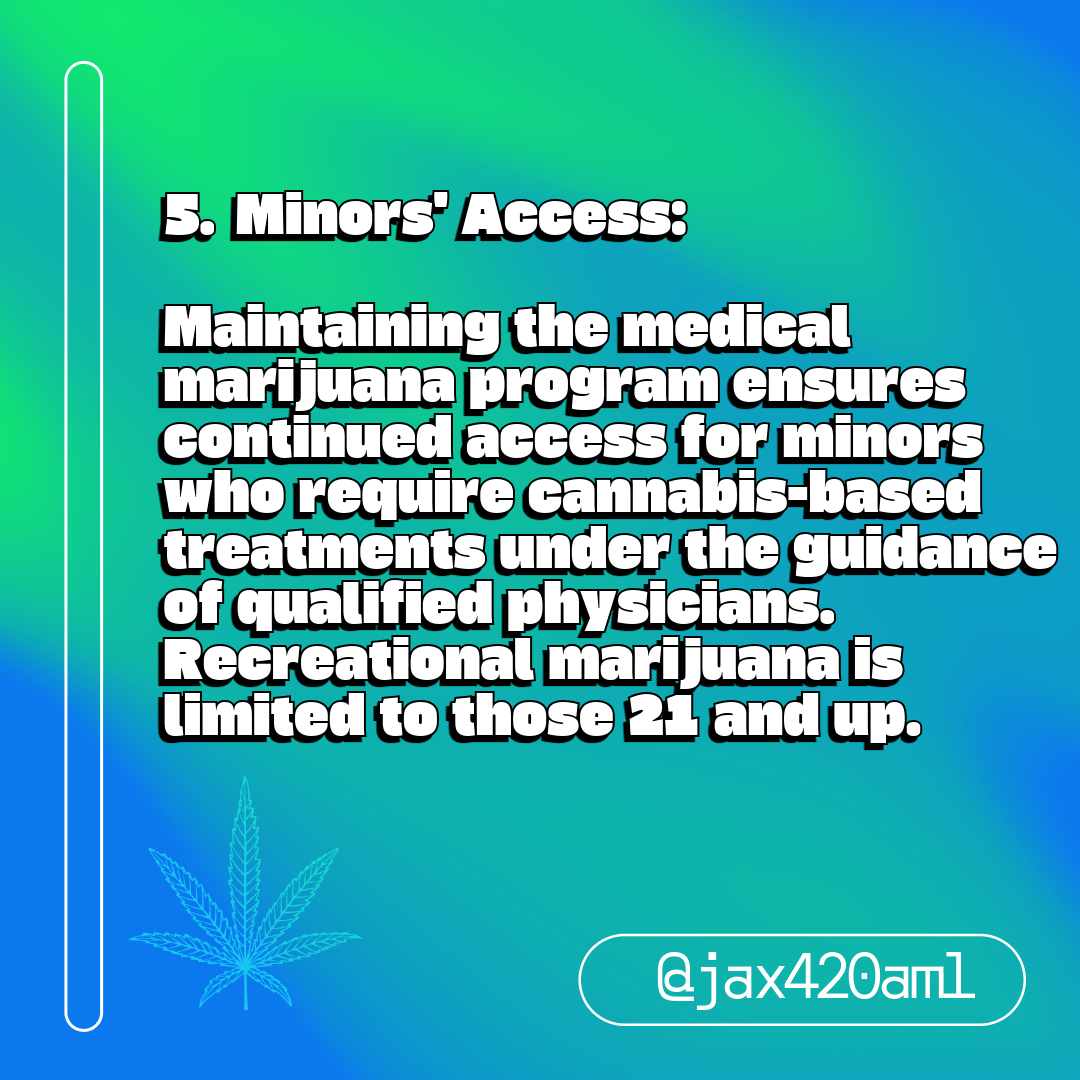
  • Minors’ Access: Maintaining the medical marijuana program ensures continued access for minors who require cannabis-based treatments under the guidance of qualified physicians.
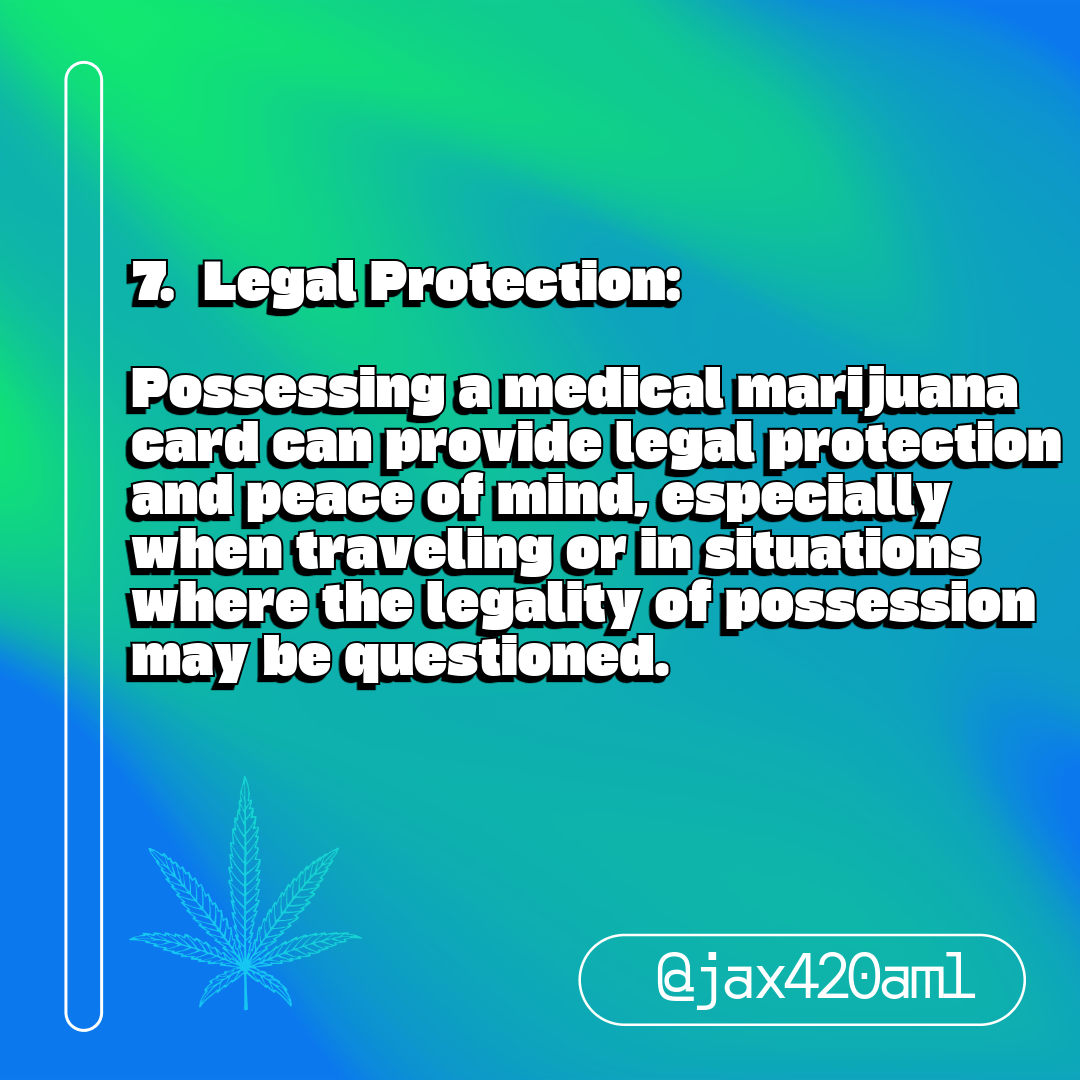
  • Legal Protection: Possessing a medical marijuana card can provide legal protection and peace of mind, especially when traveling or in situations where the legality of possession may be questioned.
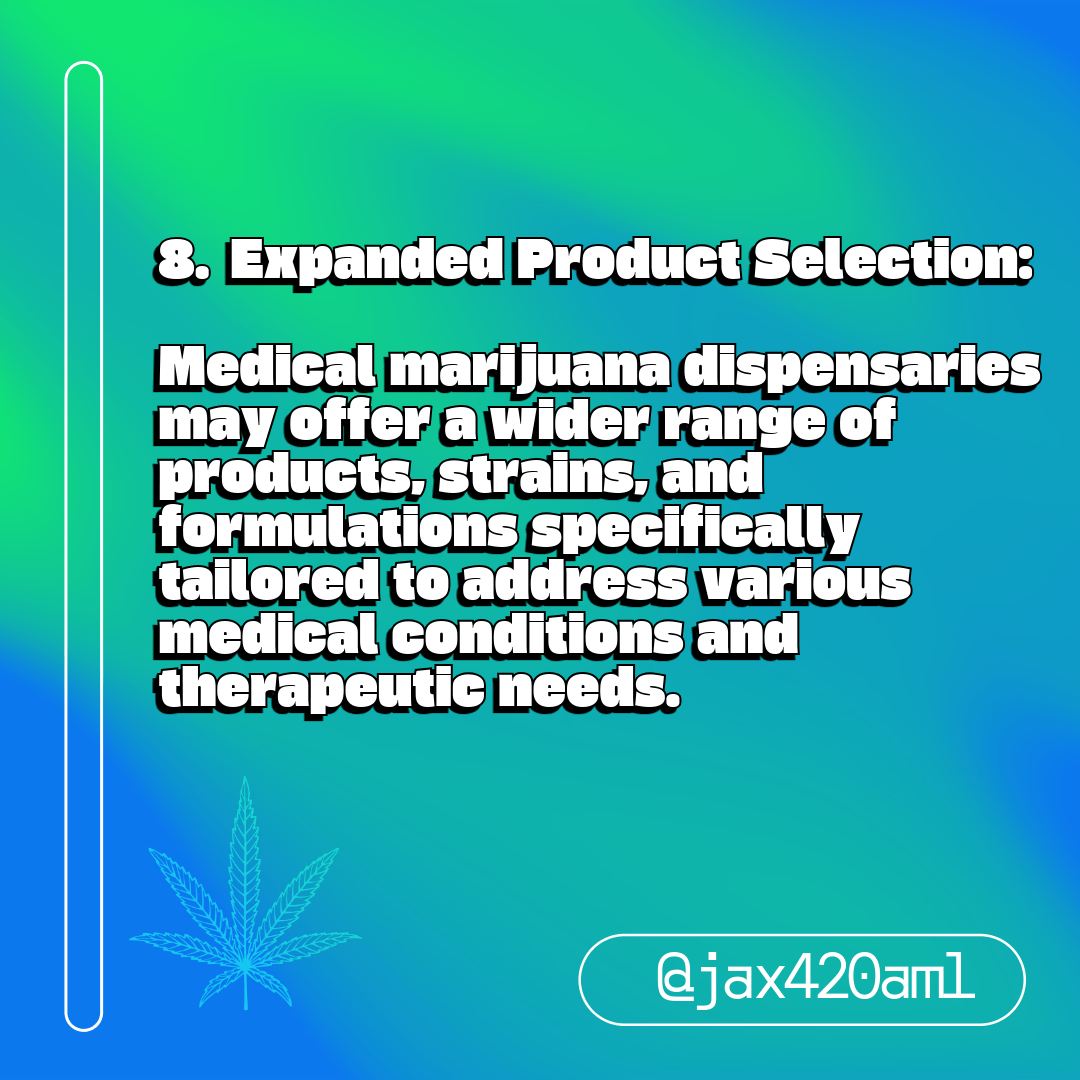
  • Expanded Product Selection: Medical marijuana dispensaries may offer a wider range of products, strains, and formulations specifically tailored to address various medical conditions and therapeutic needs.
Ventajas de mantener la tarjeta médica Introducción
Ventajas de mantener la tarjeta médica Slide 1
Ventajas de mantener la tarjeta médica Slide 2
Ventajas de mantener la tarjeta médica Slide 3
Ventajas de mantener la tarjeta médica Slide 4
Ventajas de mantener la tarjeta médica Slide 5
Ventajas de mantener la tarjeta médica Slide 6
Ventajas de mantener la tarjeta médica Slide 7
Ventajas de mantener la tarjeta médica Slide 8
The Path Forward: Navigating Legalization

As Florida inches closer to the pivotal vote on Amendment 3, industry experts and advocates alike emphasize the importance of responsible and informed decision-making. While the legalization of recreational marijuana could introduce a new era of access and opportunity, preserving the medical marijuana program remains a priority to safeguard the rights and needs of patients.

The state legislature will play a crucial role in crafting regulations and guidelines that strike a balance between recreational and medical use, ensuring that the interests of both communities are protected and fostered. Ongoing dialogue, education, and collaboration among policymakers, healthcare professionals, and industry stakeholders will be essential in shaping a framework that promotes public health, safety, and equitable access.

Ultimately, the decision to retain a medical marijuana card in the event of recreational legalization will be a personal choice for each patient, weighing factors such as cost, accessibility, legal protection, and individual medical needs. By staying informed and engaged in the evolving landscape, Floridians can make informed decisions that align with their values, priorities, and overall well-being.


Providers like Dr. Pulido y Dr. Neal Verma will continue to expand their medical marijuana programs to meet the needs of Florida’s ever-growing medical cannabis market.

Here’s why you should act now:

  • Expert guidance tailored to your specific health needs
  • Access to a wider variety of high-quality, regulated products
  • Potential cost savings compared to recreational use
  • Continued legal protection and priority access

Taking the first step is easy:

  1. Haga clic Aquí. to get started
  2. Choose a convenient time slot
  3. Complete a brief pre-appointment questionnaire
  4. Our office will confirm your appointment via email and phone.


👉 [BOOK YOUR APPOINTMENT NOW!] 👈


¿Preguntas? Nuestro amable personal está aquí para ayudar.
Llame o envíenos un mensaje al 904-586-0041
or email us at main@affordablemarijuanalicense.com

Marihuana-Opioides-1200x721.jpg

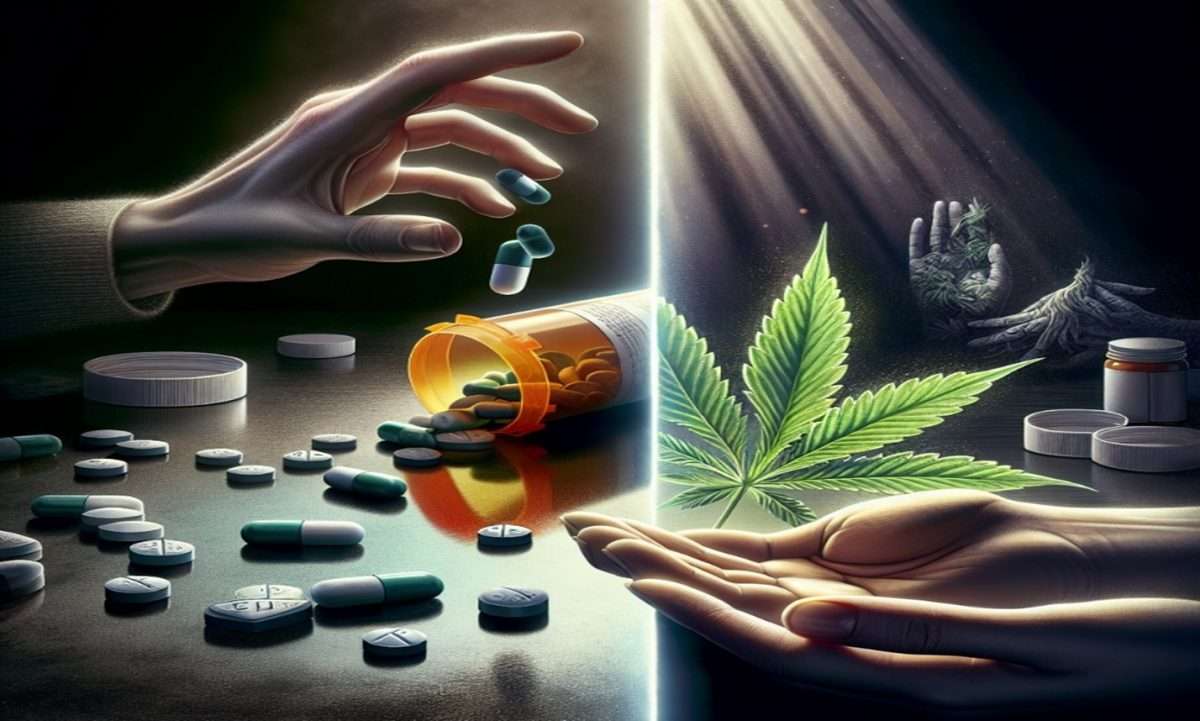
La crisis de los opioides ha devastado comunidades en los Estados Unidos, lo que ha provocado un aumento de las sobredosis y las muertes. A medida que los profesionales de la salud y los encargados de la formulación de políticas buscan soluciones, la marihuana médica ha surgido como una alternativa potencial a los opioides para la gestión del dolor. Este remedio natural ha ganado atención por su capacidad para aliviar el dolor crónico, al tiempo que reduce potencialmente el riesgo de sobredosis asociado con el uso de opioides.

La investigación sobre la conexión entre la marihuana médica y el uso de opioides ha revelado resultados prometedores. Estudios sugieren que los estados con programas legales de marihuana médica han visto una disminución de las recetas opioides y muertes relacionadas con opioides. Este artículo explora el creciente cuerpo de evidencias que apoyan el uso de marihuana medicinal como una herramienta para combatir la epidemia de opioides. También examina cómo esta opción de tratamiento alternativo podría ayudar a reducir las tasas de sobredosis y mejorar los resultados de los pacientes en la gestión del dolor.

La crisis opioides y la necesidad de alternativas

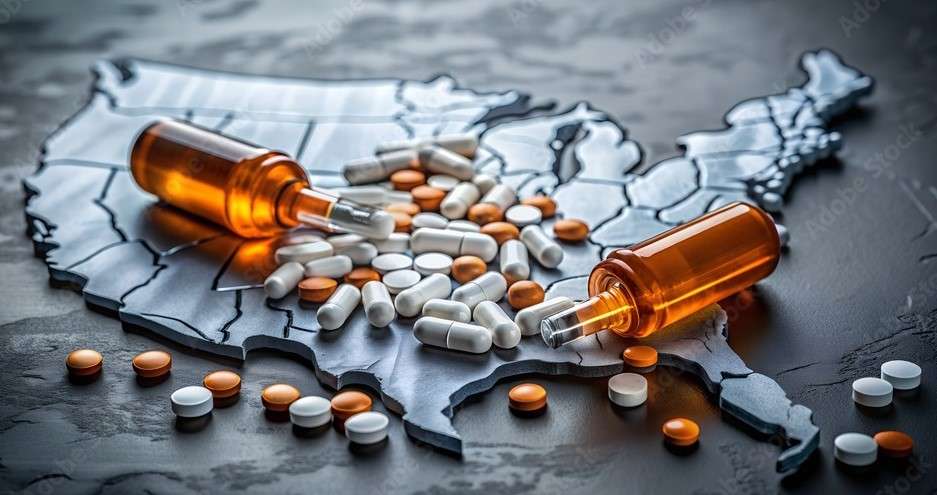
USA Crisis de opioides

Comprender la Epidemia Opioides

La crisis opioides ha tenido un efecto devastador en las comunidades de los Estados Unidos. A medida que los profesionales de la salud y los encargados de la formulación de políticas buscan soluciones, la marihuana médica ha ganado la atención como una alternativa potencial a los opioides para la gestión del dolor. Este remedio natural ha demostrado la promesa de aliviar el dolor crónico y reducir potencialmente el riesgo de sobredosis asociado con el uso de opioides.

La Escala de la Epidemia Opioides

La crisis opioides ha alcanzado proporciones alarmantes, con importantes impactos en la salud pública. En Florida, los datos recientes indican que el 4,0% de los individuos mayores de 12 años se dedicaron al uso de opioides no medicinales, mientras que el 0,70% experimentó un trastorno del uso de opioides. La tasa de mortalidad por sobredosis relacionada con los opioides fue de 14,4 muertes por cada 100.000 habitantes en 2016, superando la tasa nacional de 13,3 muertes por cada 100.000 personas.

La Emergencia de la Marihuana Médica como solución potencial

La marihuana médica ha surgido como una alternativa prometedora para la gestión crónica del dolor. Un estudio con 115 pacientes en COT encontró que 75 optaron por mantenerse certificado por cannabis médico debido a un alivio significativo del dolor, lo que lleva a una reducción del uso de opioides.

Opiados contra marihuana

Impacto de Marihuana Médica en el uso de opioides

Reducción de las recetas opioides

Estudios han demostrado que la marihuana medicinal tiene una influencia en la reducción de las recetas opioides. En Florida, datos recientes indica una disminución del uso de opioides no medicinales de 5,2% en 2003-2006 a 4,0% en 2015-2016 entre personas de 12 años y mayores. Esta tendencia sugiere que la disponibilidad de marihuana medicinal puede contribuir a una reducción del uso indebido de opioides.

Disminución de la dependencia de opioides

La introducción del cannabis medicinal ha ocasionado una disminución de la dependencia de los opioides. Un estudio en el que participaron 115 pacientes en terapia crónica de opioides (COT) encontró que 75 optaron por permanecer certificados por cannabis médico debido a un alivio significativo del dolor. Esto dio lugar a una reducción sustancial del uso de opioides, con una disminución promedio del 67,1% en los equivalentes diarios de morfina miligramos (MME) en el primer seguimiento, de 49,9 a 16,4 MME.

Mujer en una botella

Tasas inferiores de sobredosis relacionados con los opioides

La implementación de programas de marihuana médica se ha asociado con tasas más bajas de sobredosis relacionados con opioides. En Florida, la tasa de mortalidad por sobredosis relacionada con los opioides fue de 14,4 muertes por cada 100.000 en 2016, que fue mayor que la tasa nacional. Sin embargo, la introducción del cannabis medicinal como opción de tratamiento alternativo tiene el potencial de ayudar a reducir estos números con el tiempo.

Conclusion

La marihuana médica ha demostrado resultados prometedores en la lucha contra la crisis de los opioides. Su capacidad para manejar el dolor crónico eficazmente al reducir el uso y la dependencia de los opioides ofrece un rayo de esperanza en la lucha contra el abuso de opioides. La disminución de las recetas opioides y las tasas más bajas de muertes por sobredosis en estados con programas legales de cannabis ponen de relieve el potencial de esta alternativa natural para hacer una diferencia real en la salud pública.

A medida que la investigación continúa apoyando los beneficios de la marihuana médica en la gestión del dolor, es crucial considerar su implementación más amplia en las estrategias sanitarias. Los resultados positivos observados hasta ahora sugieren que el cannabis medicinal podría desempeñar un papel clave en la lucha contra la epidemia de opioides y salvar vidas.

Entra Licencia de marihuana asequible hoy para ver cómo el cannabis medicinal puede beneficiar su vida! Al explorar esta opción de tratamiento alternativo, podemos crear un enfoque más seguro y eficaz para la gestión del dolor y reducir el impacto devastador de la adicción al opioides en individuos y comunidades.


mmjDoctor.jpg

¿Está buscando tratamientos médicos alternativos para aliviar sus problemas de salud? Curioso sobre los beneficios potenciales de la marihuana médica pero no seguro cómo abordar el tema con su proveedor de atención primaria? ¡No busques más! En este artículo completo del blog, le guiaremos a través del proceso de discusión de marihuana médica como una opción de tratamiento con su médico.


© 2025 Licencia de marihuana asequible. Todos los derechos reservados.

EspañolesEspañolEspañol